Fall is officially here! This season, families and educators begin searching for engaging ways to make the transition back to school inspiring.
The Neon Museum offers a treasure trove of resources that blend Las Vegas history, design, art, and storytelling and these learning resources are perfect for students of all ages. From field trip guides to in-classroom experiences, the Museum makes it easy to turn back-to-school season into a neon-lit learning adventure.
Bright Ideas in the Classroom and Beyond

The Neon Museum isn’t just a place to explore in person. Its educational impact also sparks creativity and curiosity.
Teachers planning field trips or parents looking for enriching after-school activities can use ready-to-use materials like the Pre- and Post-Field Trip Activity Guides. These worksheets encourage students to reflect on what they already know about museum, what they want to learn, and later, what they discovered during their visit. By prompting kids to draw, write, and reflect on their experience, the guides help them engage actively and retain what they’ve learned.
Beyond worksheets, the museum’s free Vegas Illuminated booklet provides a beautifully designed introduction to the art of neon and its deep roots in Las Vegas culture. The booklet explores how neon signs became an essential part of the city’s identity, while also offering visuals that can inspire students in art, design, and history projects. You can find the booklet on our Learning Resources page.
Learning from Iconic Signs

For those who can’t make it to the museum, The Neon Museum’s online guide dives into the history of some of its most iconic signs, creating a virtual classroom experience with text, audio, and historic images. This guide covers legendary landmarks that helped shape the city, such as:
- La Concha Motel Lobby: Originally designed by architect Paul Revere Williams in 1961, this curvilinear mid-century structure once welcomed road-trippers on the Las Vegas Strip. Today, it serves as The Neon Museum’s visitors’ center, offering a perfect starting point for students to learn about architecture and cultural preservation.
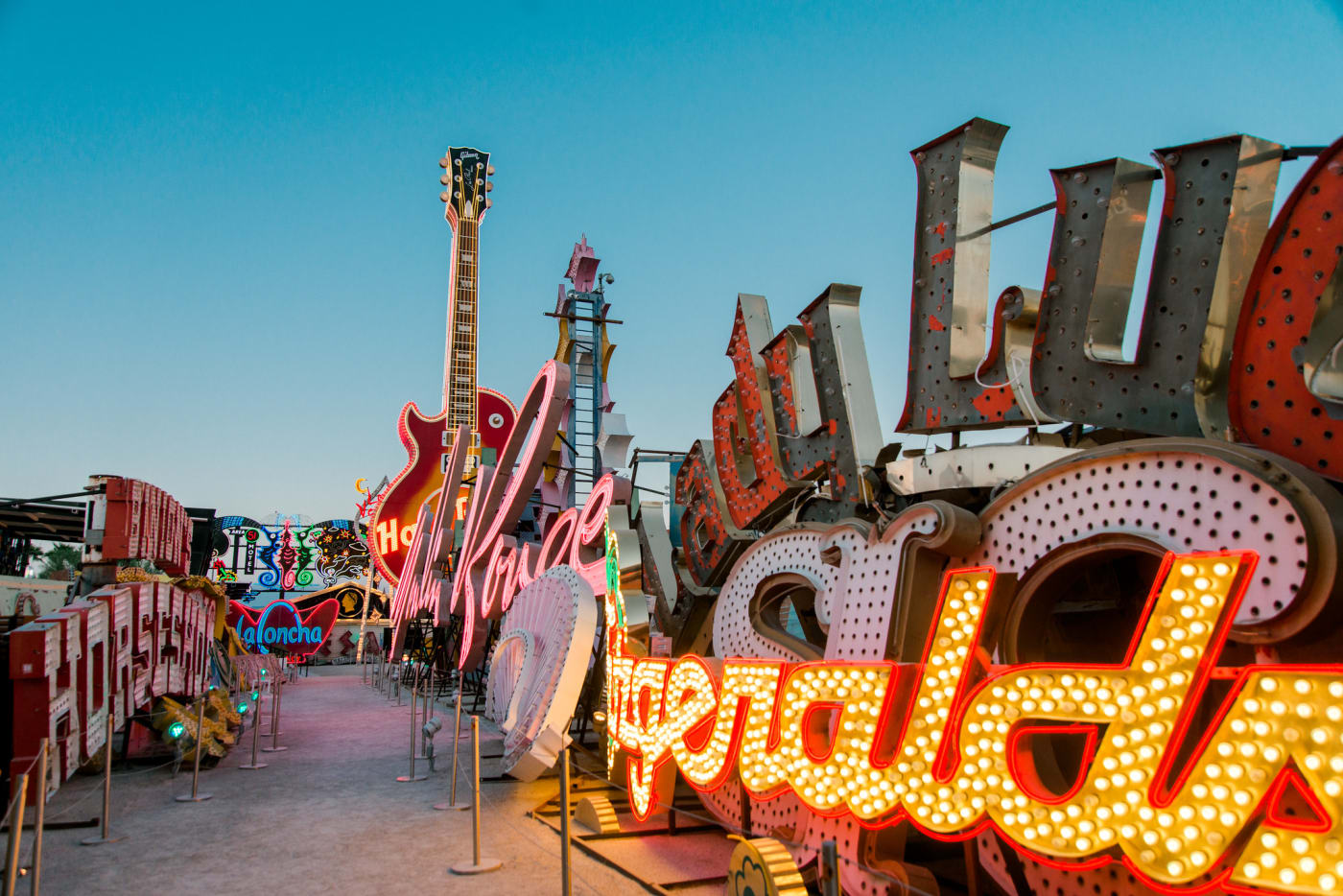
- Hard Rock Café Guitar Sign: Towering above the Strip, this giant guitar became an emblem of rock ’n’ roll culture in Vegas. Its scale and design are a reminder of how businesses used neon to shout their identities to passing drivers.
- Golden Nugget: One of the city’s oldest casinos, the Golden Nugget’s signage evolved over the decades, reflecting changing styles while preserving its reputation as a symbol of luxury and fortune.
- Moulin Rouge: Opened in 1955, this groundbreaking casino was the first integrated hotel in Las Vegas. Its neon sign is not just an artifact of design but a piece of civil rights history, opening the door to discussions about inclusion and cultural change.
- Binion’s Horseshoe: Known for its bold lettering and straightforward design, this sign reflects the clear brand of Benny Binion, whose casino helped establish Las Vegas as a gambler’s haven.
- Fitzgeralds: With its shamrock-themed design, this sign connected Irish charm to Vegas entertainment. It’s a great example of how businesses used neon storytelling to attract visitors with instant personality.
Each of these signs opens the door to different areas of study: architecture, history, civil rights, design, and marketing. Students can explore not only what these signs looked like but also what they represented to the people who created and experienced them. Access The Neon Museum online guide here with the password “Neon”.
A Resource for Families, Too
The Neon Museum’s learning resources aren’t just for classrooms. Families can use the guides at home to add some educational fun to their Vegas trips. Parents can print out activity sheets before visiting, giving kids a framework to interact with the museum. Afterward, the worksheets double as keepsakes that record their favorite memories.
Even if your family isn’t traveling to Las Vegas this school year, the museum’s online materials provide a way to bring a little neon magic home. The Vegas Illuminated booklet and the online guide can spark family conversations about art, history, and the ways cities create their identities.
Neon may have its roots in mid-century Vegas, but its lessons are timeless. For students, neon is a lens through which they can explore history, culture, science, and creativity.
As the school year unfolds, The Neon Museum invites teachers, parents, and students to light up their learning journeys. Whether you’re visiting the Boneyard in person, downloading a booklet, or exploring our online guide, there’s no better way to make education as bold and brilliant as neon!

Pride Of Philly Steaks’ Iconic Sign Finds New Home At The Neon Museum

