In the center of the Las Vegas Strip, long before mega-resorts redefined the skyline, the Dunes Hotel and Casino stood as a symbol of glamor, garnered international attention, and illustrated evolving resort design trends throughout the mid-century. Its bold, luminous, and instantly recognizable neon signs captured the spirit of an era in which Las Vegas was shaping its identity.
Let’s dive into a bit of history behind the iconic resort!

Postcard featuring the Dunes Hotel and Casino and Oasis Casino at nighttime, c. 1980s. Anthony Bondi Collection, The Neon Museum.
A Desert Oasis with a Distinct Identity
The Dunes opened in 1955 and was the 10th resort on the Strip. Developed by a group of eclectic investors, the Dunes leaned heavily into an Arabian Nights theme, a design choice that was part of both its architecture and its signage.
One of the most iconic elements of the Dunes’ visual identity was the towering neon “Sultan” fiberglass sculptural sign. This figure, dressed in stylized Middle Eastern attire, stood as both a roadside attraction and a branding device.
Neon as Entertainment
In the 1950s and 1960s, the neon signs that lit up Las Vegas were part of the performance and The Dunes’ iconic 1964 pylon is one of the essential examples of this. Its animated neon elements created a dynamic display that mimicked the excitement of the casino experience itself.
This approach aligned with broader trends in roadside architecture, particularly the influence of Googie design, where bold shapes, vivid colors, and motion were used to capture attention in an increasingly car-centric culture. The Dunes’ pylon signage functioned as both advertisement and entertainment, reinforcing the idea that Las Vegas was a place of fantasy and escape.

The implosion of the iconic Dunes Hotel and Casino in October 27, 1993. Photo Courtesy of LVCVA.
Reinvention in the 1980s and 1990s
Like many Las Vegas properties, the Dunes underwent several transformations over its lifespan. Ownership changes and shifting market demands led to updates in branding and signage, reflecting new eras of entertainment and hospitality.
By the late 20th century, however, the original mid-century charm of properties like the Dunes began to give way to a new vision for Las Vegas that was defined by larger, more immersive mega-resorts. In 1993, the Dunes was demolished to make way for what would become the Bellagio Hotel & Casino. With its spectacular closure, the Dunes made history as the first major property in Las Vegas’ history to be imploded, to a crowd of over 200,000 spectators on the Las Vegas Strip.
The implosion of the Dunes signified a broad transition in Las Vegas history. The handcrafted neon signs that once defined the Strip were increasingly replaced by large-scale architectural experiences and, later, digital displays.

Preserving the Legacy of the Dunes
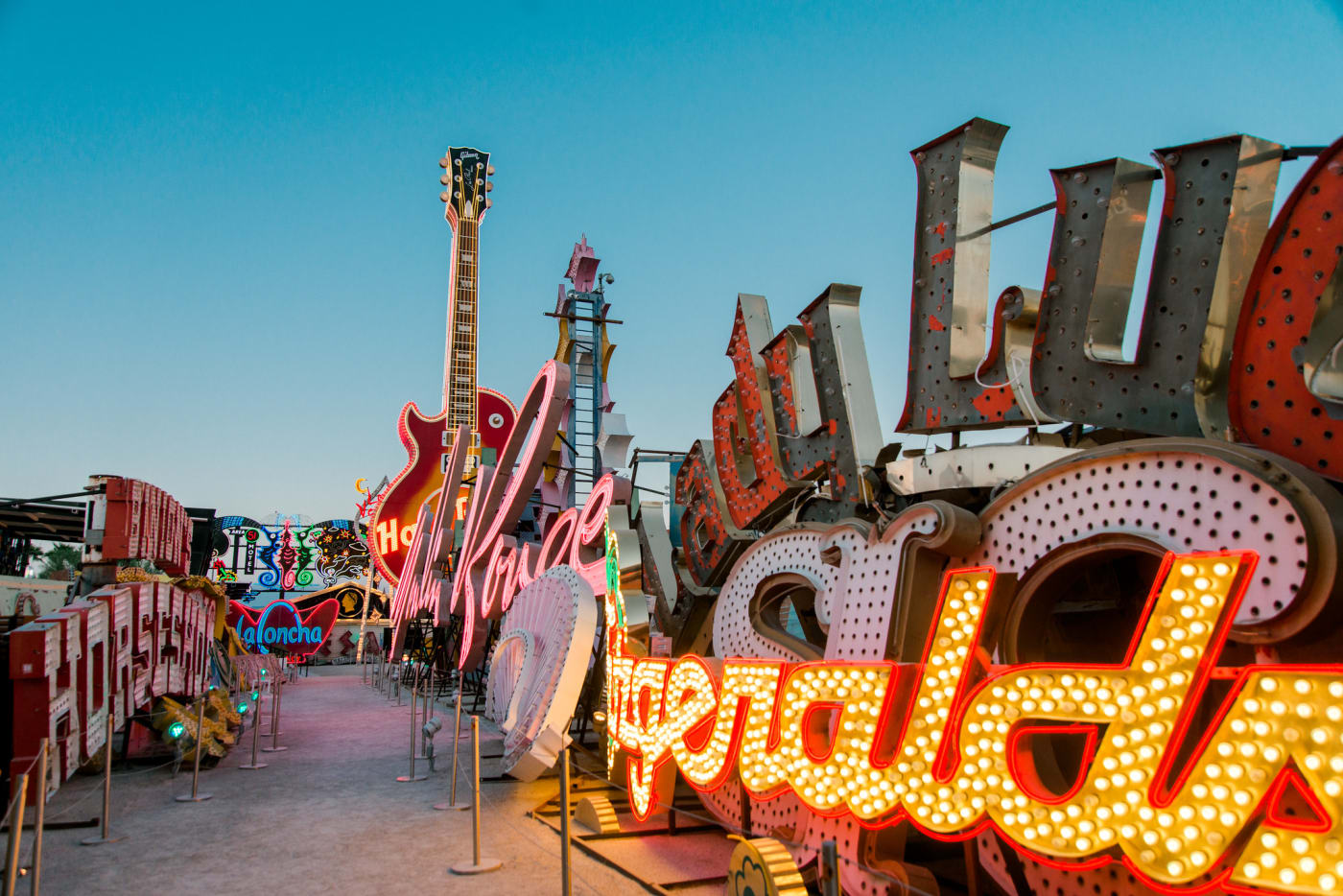
While the original Dunes sign no longer stands on the Strip, its story continues to live on. In fact, part of its legacy has been physically preserved at The Neon Museum. The last remaining sign element from the Dunes (a smaller version of its iconic pylon signage) has undergone restoration and is now illuminated once again at the museum.
More than 70 years after the Dunes first opened, the relighting of this sign represents a meaningful full-circle moment. Visitors can experience the craftsmanship, scale, and theatricality of the original design in person. The team’s restoration efforts focused on preserving the character of the piece while bringing it back to life, allowing it to function as both an artifact and a living display.
If you want to experience a piece of Las Vegas history, come see the Dunes resort sign, as well as many others, at The Neon Museum! Buy daytime or evening tickets to book your visit.

The Neon Museum to Illuminate Inaugural Formula 1 Heineken Silver Las Vegas Grand Prix 2023 Sign to Close Out Duck Duck Shed 2026, Oct. 26

Pride Of Philly Steaks’ Iconic Sign Finds New Home At The Neon Museum
