The Chief Hotel Court sign is one of the oldest surviving pieces of Las Vegas neon and a rare link to the city’s earliest era of automobile-based tourism. Dating back to around 1940, the sign reveals how roadside travel, railroad culture, and early motel design intersected during a formative moment in Las Vegas hospitality history.
Today, it holds a special distinction at The Neon Museum as the oldest operational sign in the collection. Let’s explore the history behind the sign!

Origins of the Chief Hotel Court
The Chief Hotel Court opened c. 1940, on Fremont Street, promoting itself as accommodation for visitors to use as a gateway to Lake Mead and Boulder Dam (later renamed Hoover Dam). At the time the property was called the Chief Autel Court, with ‘autel’ being a conjunction of the words auto and hotel. Later this would typically be referred to as a motel, combining motor and hotel.
The property opened at a time when Las Vegas was transitioning from a railroad stop into a destination increasingly shaped by automobile travel. About a year after the motel opened, its neon sign was installed, marking the property clearly for drivers navigating the city’s growing road network.
Railroad Influence and the “Chief” Name
The headdress that is portrayed in the sign is not representative of the regalia of the Paiutes, the local Indigenous peoples of the Las Vegas valley. The Chief Hotel Court imagery is an example of the romanticized concepts of Native Americans that were common in properties trying to convey the concept of the “Old West” and uses a stereotypical Indigenous peoples of the Great Plains motif.
Although the property was designed for car travelers, the motel’s identity was somewhat shaped by the railroad. It is believed that the “Chief” imagery may have been inspired by the branding of the Atchison, Topeka and Santa Fe Railroad line, a well-known route of the era.
This connection shows how Las Vegas travel culture in the late 1930s and early 1940s was influenced by both rail and road. Even as automobiles became more common, railroads still played a major role in shaping regional travel and visual branding.
A Single Sign That Endured for Decades
Unlike many Las Vegas properties that cycled through multiple redesigns, the Chief Hotel Court had one neon sign that lasted until its closure in 1989 and which resides in working order in the Neon Boneyard today.
The motel was one of the longest operating examples of early roadside lodging in Las Vegas. Not long after its closure, the motel was demolished in the early 1990s, reflecting broader redevelopment trends that reshaped much of the city’s mid-century style.
What the Sign Tells Us About Early Las Vegas Hospitality
The Chief Hotel Court reflects a time when Las Vegas hospitality was personal, practical, and closely tied to transportation networks. Motel courts like this one catered to travelers seeking convenience, affordability, and easy access, long before destination resorts consolidated lodging and entertainment into single complexes like we see today.
Preservation of the Chief Hotel Court Sign at The Neon Museum
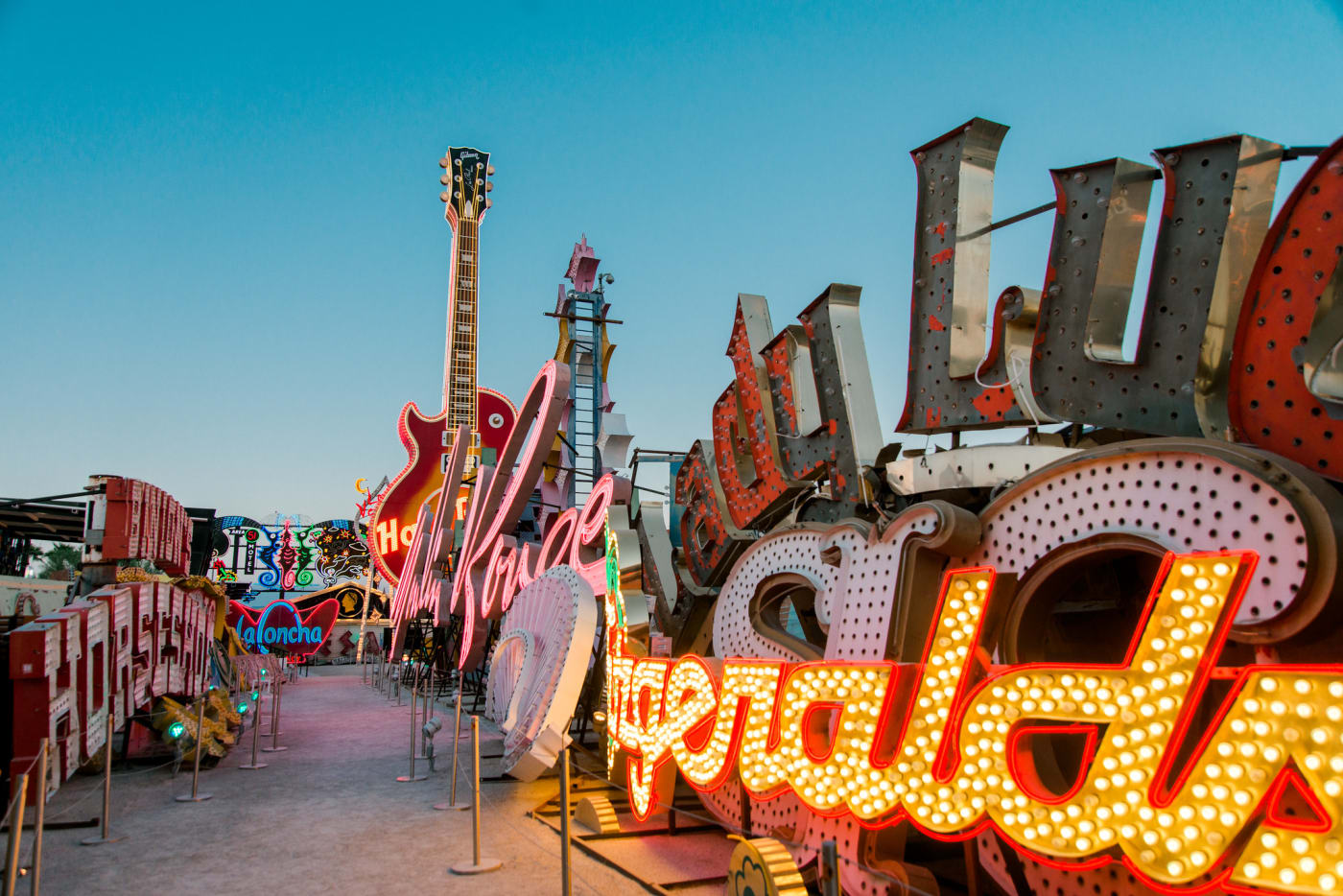
Received in working order, today, the Chief Hotel Court sign is maintained by The Neon Museum, offering visitors a rare opportunity to see early Las Vegas neon signage much as it would have appeared to travelers more than 80 years ago.
As the oldest operational sign in the museum’s collection, it serves as a benchmark for understanding how Las Vegas signage evolved from modest roadside markers to the massive signs that later defined the Strip.
Other Early Motel and Roadside Signs at The Neon Museum
The Chief Hotel Court sign is part of a broader group of preserved signs that document the early hospitality and travel culture of Las Vegas. Other examples in The Neon Museum’s collection that reflect similar themes of roadside visibility, automobile access, and mid-century design, include signs like the La Concha Motel, the Yucca Motel, and Desert Rose Motel.
Together, these signs illustrate how neon served as both advertising and architecture as it guided travelers, helped establish brand identity, and shaped the visual experience of Las Vegas long before the era of mega-resorts.
Want to experience more historic neon signs? Come visit The Neon Museum next time you’re in Las Vegas!
SOURCES
- Vintage Las Vegas. “Chief Hotel Court.” Accessed February 11, 2026. https://vintagelasvegas.com/post/165029822094/chief-hotel-court.
- The Neon Museum. “The Chief Hotel Court is an older sign dating back to c. 1940…” Facebook post. Accessed February 11, 2026. https://www.facebook.com/NeonMuseum/posts/the-chief-hotel-court-is-an-older-sign-dating-back-to-c-1940-the-property-opened/10156194943950754/.

The Neon Museum to Illuminate Inaugural Formula 1 Heineken Silver Las Vegas Grand Prix 2023 Sign to Close Out Duck Duck Shed 2026, Oct. 26

