In 1957, a walk down Fremont Street was an immersion into light.
Before mega-resorts and themed towers made up the skyline, downtown Las Vegas was the heart of the city’s entertainment district. Here, beneath a desert sky, visitors experienced a one-of-a-kind walk underneath glowing marquees, animated bulbs, and towering signs. Fremont Street in the late 1950s was a sight to see.
Although we don’t have a time machine to actually relive that time period, we can take a walk down memory lane and celebrate what made this time so special in Las Vegas’ history.

The Pioneer Club, c. 1950s. UNLV Libraries Special Collections & Archives
The Glow of Old Vegas
By 1957, Fremont Street was well established as a neon-rich gambling district. Casinos and clubs competed not only for gamblers’ dollars but for their attention. Signs stretched high above the sidewalk, layered one beside another in a vivid canopy of color.
The Golden Nugget blazed with gold-toned lettering and incandescent trim, emphasizing prosperity and promise. Down the block, the Pioneer Club beckoned guests with Vegas Vic, its towering cowboy whose animated arm waved to everyone down below.
To walk down Fremont Street in 1957 was to walk among some of the most iconic neon signs in history. Even if all you did with your evening was people watch, the area itself made it a unique experience.
Movement in Light
In addition to the stunning brightness of the neon signs of Fremont Street in 1957, visitors were drawn in by the signs’ animation
Designers used “chasing” bulbs, or sequentially flashing lights, to simulate motion. Starbursts exploded outward, arrows pulsed toward entrances, and neon figures appeared to tip hats or raise glasses. This sense of movement reinforced the idea that something exciting was always happening inside.
Vegas Vic’s mechanical wave became one of the most recognizable gestures in American roadside iconography. Animated signage blurred the line between advertisement and performance, encouraging visitors to keep walking, looking, and entering.
Architecture That Creates Atmosphere
Yes, the neon signs of 1957 advertised their establishments, but they also reshaped the street itself. In addition to the bright lights, many hotels and casinos used large rooftop signs and projecting structures to extend beyond the rooftop and over sidewalks.
In fact, you can still see this influence today with classic hotels like The Golden Nugget, whose entryway is a large dome, or Four Queens, whose sign is a giant circle with clear lettering and a crown motif.
In the 1950s, this layering created a canyon of light. Even during quieter hours, Fremont Street retained a nonstop glow. Visitors arriving by car, taxi, or on foot would encounter a tightly packed district of signs and architecture that was compact, energetic, and intensely illuminated.
In an era before digital screens, this was immersive media at its most ambitious.
The People Beneath the Neon
Of course the signs that covered Fremont Street were iconic, but it was the people that really made the city shine.
Tourists in evening wear moved between casino entrances. Cocktail waitresses stepped through swinging doors into the glow. Dealers and entertainers finished shifts under the hum of transformers and buzzing tubes. Everywhere you turned, you were sure to run into someone you would never have expected to meet.
In 1957, Fremont Street represented possibility in the form of quick fortunes, late nights, and the novelty of a city that never slept.
Preserving the Light
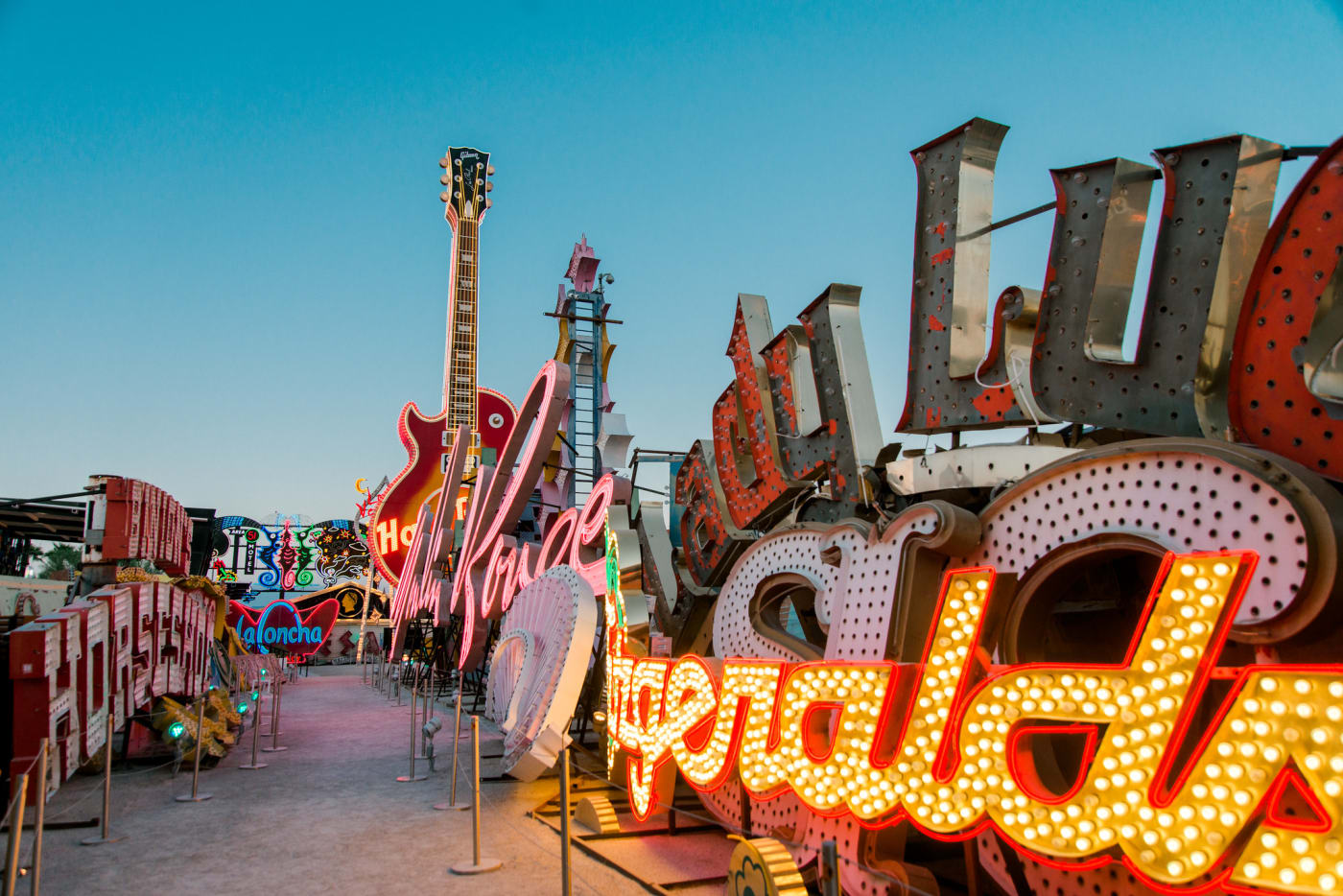
Today, many of the original signs that defined Fremont Street’s mid-century identity no longer stand in their original locations. Yet their legacy endures through preservation efforts by The Neon Museum.
The museum’s collection includes iconic downtown signage and visitors can experience the scale and craftsmanship of these historic works up close. Restored neon tubes, hand-bent glass, and animated elements offer a tangible connection to the design innovations of the 1950s.
In fact, a walk through the Neon Boneyard is, in many ways, a continuation of that 1957 stroll as it’s an opportunity to stand beneath the same glowing forms that once defined the city’s skyline.

Westward view of downtown Las Vegas, from Second and Fremont Streets, c.1954 to 1959. UNLV Libraries Special Collections & Archives
Looking Back to See the Future
Fremont Street in 1957 was a sight to see and was ground zero for ambition, artistry, electricity, and imagination. All of those things combined to create an environment unlike any other.
And though the skyline has evolved, the spirit of that illuminated corridor remains one of Las Vegas’ most enduring symbols and sets the foundation for today’s signs. For example, the Fremont Street Experience represents a new iteration of that same drive to immerse visitors in dazzling lights that they will remember forever. The Viva Vision screen animates the sky above Fremont much like starbursts and waving cowboys once animated the hotels and casinos below. And that’s just one example of how neon has shaped the city we know today.
The materials have changed, but the spirit has not and that’s why we’re so passionate about looking back to understand today and the future. If you want to see the craft behind these amazing signs, visit The Neon Museum today!

The Neon Museum to Illuminate Inaugural Formula 1 Heineken Silver Las Vegas Grand Prix 2023 Sign to Close Out Duck Duck Shed 2026, Oct. 26

