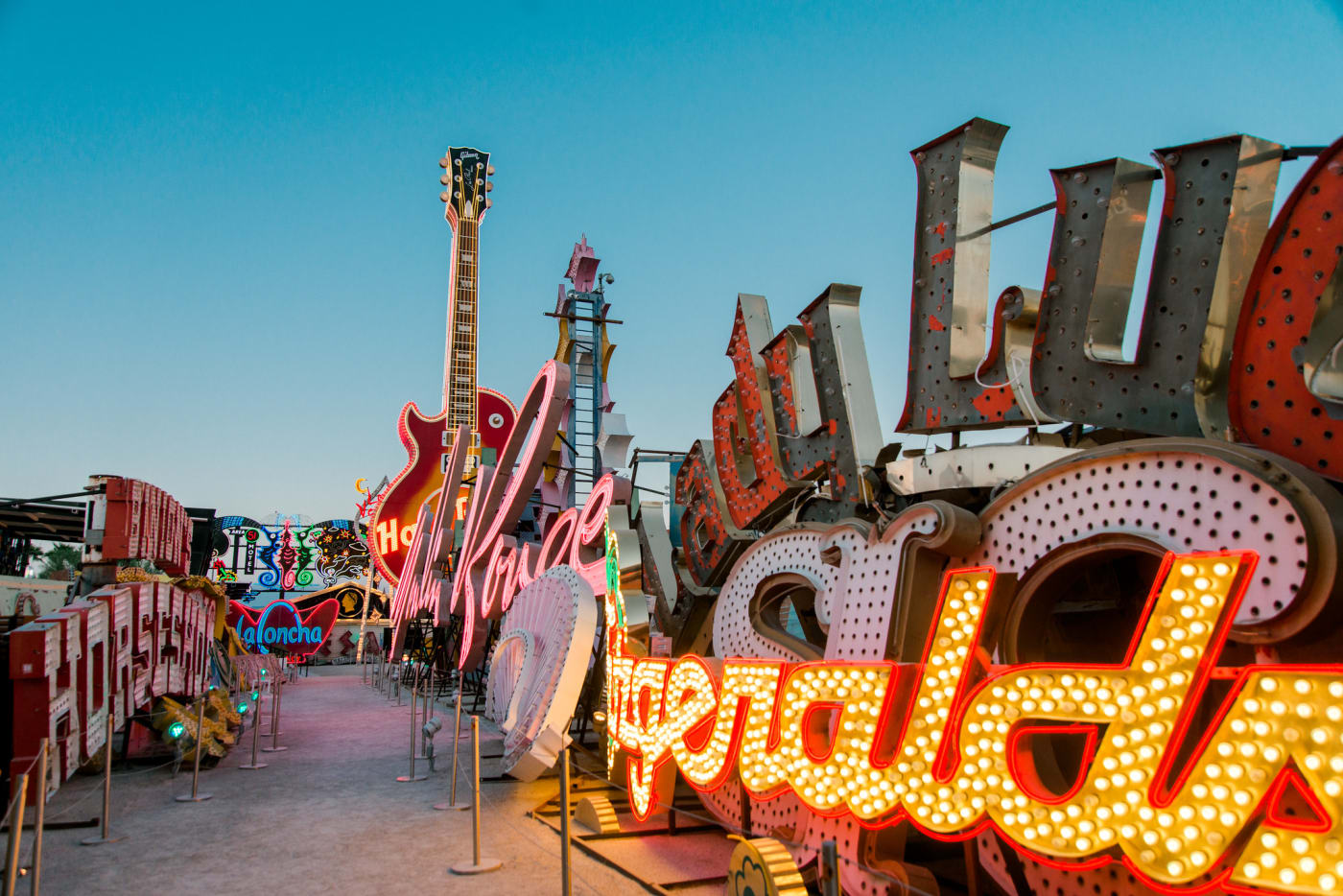
Vintage neon signs are both business and art. In cities like Las Vegas, designers combined bold typography, animated lighting, and architectural scale to capture attention in an increasingly competitive visual landscape.
From chasing bulbs to atomic starbursts, the design elements and animated effects below became hallmarks of classic Las Vegas signage. Each reflects the trends of its time and shows how neon evolved as both art and advertising.

Chasing Marquee Bulbs
Before full neon animation became common, incandescent bulbs were wired in sequence to create a “chasing” effect along a sign’s border. This technique, widely used on theater marquees and casino façades, created the illusion of motion and drew attention from passing motorists.
The Hacienda Horse & Rider sign (1967), one of the best-known pieces in the Las Vegas Boulevard Scenic Byway Project, incorporates animated lighting that suggests the horse’s movement. The effect builds on earlier sequential-lighting techniques used in marquee signs.

Neon Animation Through Flashing Circuits
Unlike static tubing, animated neon signs used multiple transformers and timed circuits to create flashing, blinking, or sequential effects. By illuminating sections of tubing in order, designers could simulate movement, such as flowing water, spinning wheels, or cascading letters.
Neon sign animation became more sophisticated after World War II, when larger resort properties competed for visual dominance along expanding highways.

The Atomic Starburst
The starburst motif, often associated with mid-century Atomic Age design, appeared frequently in 1950s Las Vegas signage. Inspired by space exploration and futuristic aesthetics, these radiating shapes reinforced the city’s forward-looking image.
Architectural historians link the popularity of starbursts to Googie architecture and Space Age design trends that influenced commercial signage across the American West. The Neon Museum’s own writing also describes how color and spectacle helped define old Vegas sign design.
You can’t talk about Atomic starbursts without mentioning the iconic Stardust sign, preserved at The Neon Museum. Its starburst forms reflect the exuberance and spectacle associated with Atomic Age design in Las Vegas.

Freestanding Pylon Signs
Tall vertical structures that could be seen from a distance became a defining feature of the Las Vegas Strip. As automobile traffic increased, signs grew taller and more elaborate.
By the 1960s, signs often surpassed the buildings they advertised and became the primary visual identity of the property. This idea is explored in Learning from Las Vegas, which examines the role of signage, scale, and spectacle in the city’s architectural identity.
The Silver Slipper sign, now part of the Las Vegas Boulevard Scenic Byway Project, featured a rotating slipper on a single pylon. The original slipper rotated, combining mechanical motion with chasity bulbs.

Script Lettering in Neon Tubing
Neon tubing allowed sign makers to bend continuous glass into flowing cursive scripts. This flexibility made it possible to create elegant, handwritten-style logos that felt glamorous and inviting.
Neon’s ability to form continuous curves distinguished it from earlier electric sign technologies, and that made script signage especially popular in the mid-20th century. The Moulin Rouge sign, now part of The Neon Museum’s collection, is a strong example of script lettering in neon. This font was designed by hand by Betty Willis.

Layered Color Combinations
Classic neon signs frequently combined multiple colors, including reds, blues, greens, and yellows, to heighten contrast, improve nighttime visibility, and create visual interest.
Neon color was shaped by gas fills and phosphor coatings inside the tubing, allowing sign designers to achieve a broader range of hues. Those colors could also evoke mood and personality, from romance to excitement to good fortune.
The vintage La Concha sign demonstrates the layered color use typical of mid-century resort signage.
Exploding Letterforms and Radiant Outlines
Many vintage signs featured layered outlines, such as glowing borders surrounding letters to create depth and dimension. This technique amplified legibility while adding a sense of visual energy.
In Learning from Las Vegas, the authors describe this broader approach as part of the city’s spectacular signage culture, where scale, brightness, and layered lighting worked together to dominate the skyline.
Symbolic Icons in Motion
Beyond text, many classic signs incorporated animated icons, such as cowboys tipping hats, martini glasses filling, or dice tumbling. Sequential lighting circuits gave these symbols life and reinforced brand identity.
Some of these animated signs still stand today. Next time you walk down Fremont Street, look for Vegas Vic. While his waving motion is no longer active, he still stands tall as a reminder of Las Vegas’s animated sign heritage.
At The Neon Museum, our preserved signs continue to demonstrate how animation and design shaped the city’s identity. From flashing bulbs to glowing starbursts, these vintage sign elements are evidence of a distinct American design language that transformed the desert skyline.
SOURCES
- The Neon Museum. “Exploring the Neon Color Palette and What These Hues Meant to Old Vegas.”
- The Neon Museum. “Las Vegas Boulevard Scenic Byway Project.”
- MIT Press / Learning from Las Vegas discussion and overview
- Travel Agent Central. “Neon Museum Restores Silver Slipper Sign to Its Original Form.”

The Neon Museum to Illuminate Inaugural Formula 1 Heineken Silver Las Vegas Grand Prix 2023 Sign to Close Out Duck Duck Shed 2026, Oct. 26

