Community Leaders to Gather for Special Ceremony of Historic Las Vegas Landmark
The City of Las Vegas and The Neon Museum will commemorate the 30th anniversary of the historic Hacienda Horse and Rider sign’s installation as public art with a special ceremony and lighting on Friday, November 13. The event will honor the people and organizations whose efforts helped preserve one of Las Vegas’ most recognizable signs and advance the city’s early movement to protect its historic neon.
Designed by Brian “Buzz” Leming and fabricated by the Young Electric Sign Company (YESCO) in 1967, the sign was modeled after J.B., a palomino horse owned by Hacienda Hotel and Casino co-owner Judy Bayley. Installed at the corner of Las Vegas Boulevard and Fremont Street in November 1996, it became the first piece installed as public art in what would become The Neon Museum’s collection.

The ceremony will feature remarks from Las Vegas Mayor Shelley Berkley; former Mayor Jan Jones Blackhurst; The Neon Museum Executive Director and CEO Aaron Berger; community leader, Barbara Molasky, and Jeff Young of YESCO. The program will culminate in a ceremonial lighting of the sign.
“The Hacienda Horse and Rider sign is a historic piece of Las Vegas’ past that is now living a second life as an iconic public art installation,” Mayor Shelley Berkley said. “When it was installed in 1996 it was the start of the city embracing our vintage Vegas roots and helped lead to more historic signs being saved and added to Las Vegas Boulevard and ultimately the birth of the fabulous Neon Museum.”
The sign’s history is closely tied to the development of Las Vegas and its gaming industry. The Hacienda Hotel opened on June 7, 1956, with 266 rooms, adding a casino the following year. After her husband, Warren “Doc” Bayley, died in 1964, Judy Bayley became the first woman in Nevada to solely own and operate a hotel and casino.
As the Hacienda grew, its distinctive Horse and Rider sign became a recognizable landmark. Following the hotel’s closure in December 1996, the sign’s preservation took on added significance as part of a broader community effort to protect Las Vegas’ visual history.
The sign’s restoration in 1996 was made possible by Brad Friedmutter and the City of Las Vegas. The Allied Arts Council of Southern Nevada also played an important role in advocating for the preservation of historic signs and laying the groundwork for The Neon Museum.
The installation of the Horse and Rider sign was an important milestone in the development of The Neon Museum. Following years of advocacy by the Allied Arts Council, the City of Las Vegas invested in the infrastructure needed to preserve historic signs and establish a dedicated space for the city’s neon heritage. In September 1997, the City Council unanimously voted to support the incorporation of The Neon Museum as a nonprofit organization.
In July 2000, the Allied Arts Council transferred ownership of the Horse and Rider sign to The Neon Museum, along with several other historic signs from Las Vegas properties and businesses. The transfer helped expand the Museum’s collection and support its ongoing mission to preserve the signs and stories that have shaped the city.
Jones Blackhurst said, “As Mayor at the time, I am so proud to know that I had the opportunity to light the way for what would become The Neon Museum. I would love to give due respect to then City employee Barbara Molasky and Steve Weeks of YESCO, who prioritized preserving our history. This effort began a new era of arts and culture in Las Vegas.”
“To have Fremont Street and Las Vegas Blvd as The Neon Museum’s origin story is an incredible piece of our own history. It was the beginning of our city’s historic preservation efforts, and this piece stands proudly on the first paved street in Las Vegas. What a fitting beginning.” Berger continued, “As Fremont Street is visited by over 20 million people a year, the Hacienda Horse and Rider is photographed daily, appreciated by visitors from across the globe, and remains a place for locals and natives to reminisce.”
ABOUT THE NEON MUSEUM
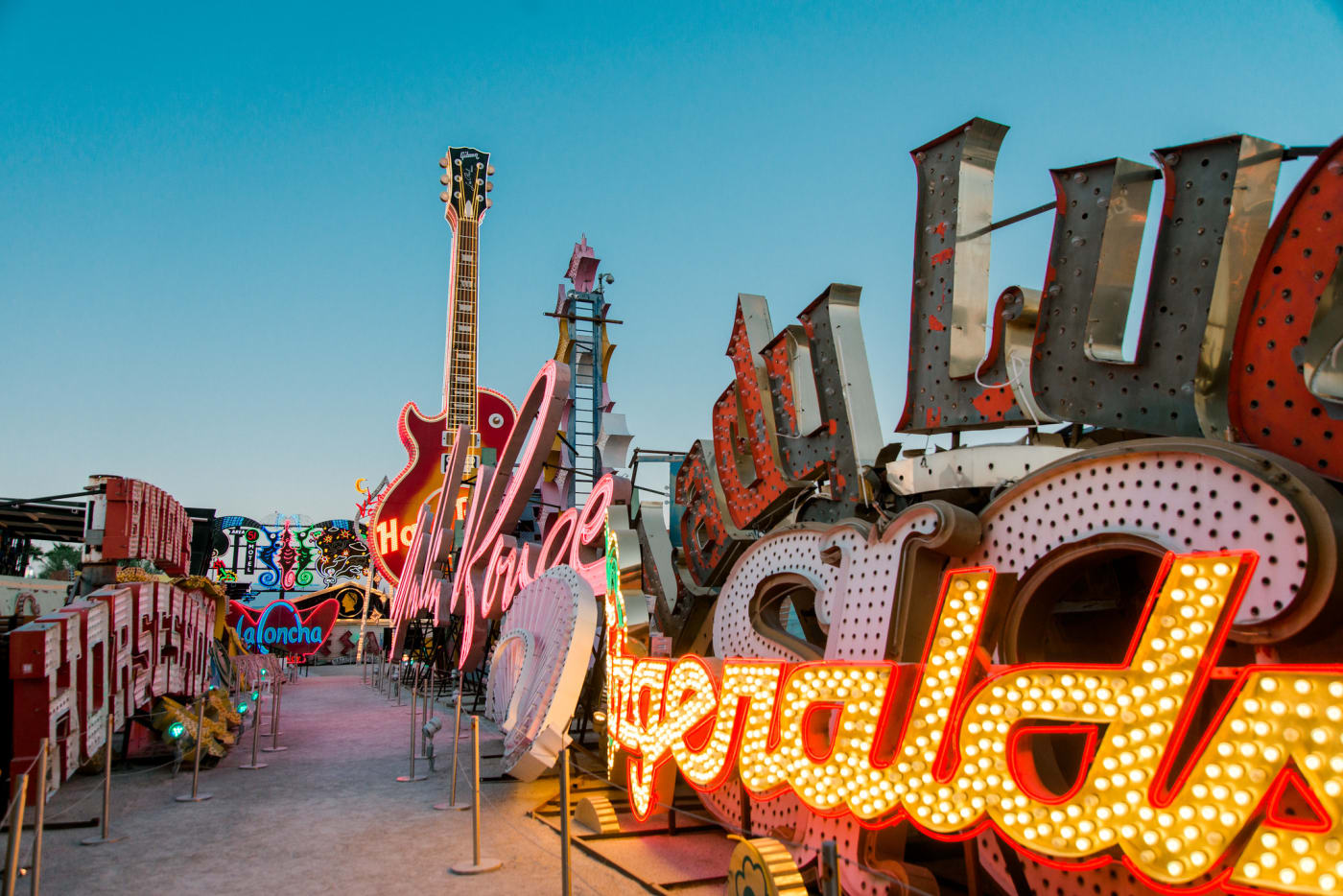
The Neon Museum illuminates the cultural essence of Las Vegas by sharing iconic signage, diverse collections and stories that define its vibrant past, present and future. Its core values seek to create a sense of belonging for everyone; promote scholarship through its work and collaborations; offer fun engagement that reflects the spirit of Las Vegas; and demonstrate overall excellence.
Founded in 1996, The Neon Museum achieved accreditation by the American Alliance of Museums (AAM) in 2021, the highest national honor for museums in the United States. Situated on a 2.27-acre campus, the Museum features:
- The Neon Boneyard: An outdoor exhibition space displaying historic signs no longer in use.
- The North Gallery: Home to Brilliant! Jackpot, an immersive audiovisual experience that re-illuminates over 40 non-operational signs using advanced technology.
- The Boulevard Gallery: A transitional space showcasing collection pieces.
- The Visitors’ Center: Located in the iconic former La Concha Motel lobby designed by famed architect Paul Revere Williams.
- The Neon Boneyard Park: A green space where visitors can learn more of Las Vegas’ rich history.
The museum’s collection also includes 15 restored signs displayed as public art in downtown Las Vegas collectively known as The Las Vegas Boulevard Scenic Byway Project and additional pieces on loan to non-profits and government entities. Its ongoing initiatives encompass public education, outreach, research, and arts preservation.
For more information, including tour schedules and tickets, visit www.neonmuseum.org. Also follow @NeonMuseum on Facebook and @theneonmuseumlasvegas on Instagram.

The Neon Museum to Illuminate Inaugural Formula 1 Heineken Silver Las Vegas Grand Prix 2023 Sign to Close Out Duck Duck Shed 2026, Oct. 26

