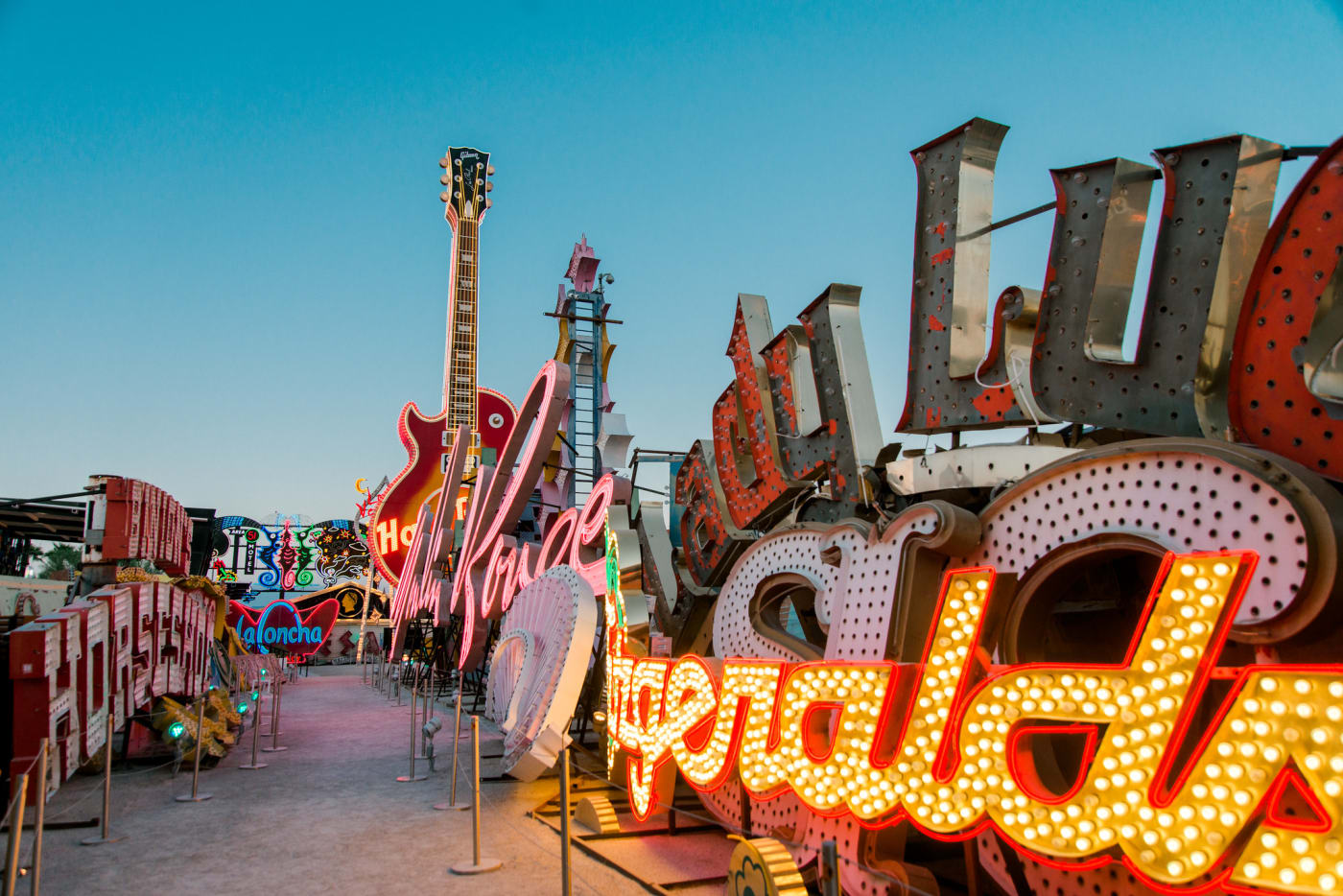
Las Vegas has always been a city full of love, from romantic weekend getaways to wedding chapels on nearly every street corner. Neon has played an important role in building Vegas’ reputation as a city full of romance. From spontaneous chapel ceremonies to milestone anniversaries at legendary resorts, neon signs have framed some of the most memorable moments of love in Las Vegas history.
Today, many of those signs (and the stories they witnessed) are preserved at The Neon Museum, where love continues to glow. Let’s learn more about how neon has helped create the romance scene in Las Vegas!
Wedding Chapels in Las Vegas
Few cities are as synonymous with weddings as Las Vegas. In the 1930s and ’40s, Nevada’s relaxed marriage laws and 24-hour culture helped cement the city as the quick-ceremony capital of the world. But it was neon that made those ceremonies iconic.
The glowing façade of A Little White Wedding Chapel, with its unmistakable heart motifs and radiant signage, has illuminated countless vows. Celebrities and everyday couples alike have passed through its doors, drawn by the promise of instant matrimony beneath its iconic neon signs (including its lit-up Drive-thru Tunnel of Love!).
Similarly, Graceland Wedding Chapel has long paired romance with showmanship. Its iconic, and historic, neon sign is a huge message of love for everyone on the Strip and without this one-of-a-kind sign, one of Las Vegas’ most popular wedding chapels might not be nearly as popular as it is today.
The signs of these (and many more) wedding chapels have served as the backdrops for photos, witnessed thousands of first married kisses, and been there for lifelong declarations of commitment.

Courtesy: Bettmann / Getty Images
Celebrity Love Stories Framed by Neon
One of the things that makes Las Vegas marriages so popular is the number of celebrity marriages throughout the city.
In 1967, Elvis Presley married Priscilla Presley in Las Vegas, reinforcing the city’s reputation as a city of romance. The wedding itself was relatively private, but it started the trend that Las Vegas was synonymous with bold declarations and unforgettable moments.
Decades later, that reputation remained intact. In 2004, Britney Spears made headlines after a brief Las Vegas wedding that captured global attention. In 2019, Joe Jonas and Sophie Turner surprised fans with a spontaneous chapel ceremony following an awards show. Even sports legends like Michael Jordan got married in Las Vegas, further reinforcing the city’s association with high-profile romance.
Honeymoons and the Mid-Century Motel Boom
While celebrity weddings drew headlines, there were thousands more love stories that took place in the motels that covered Las Vegas in the 1950s and 1960s.
After World War II, automobile travel surged across the American Southwest. Newlyweds packed suitcases into sedans and followed highways toward the promise of Las Vegas. Along the Strip and surrounding roadways, motels competed for attention with animated arrows, starbursts, and elegant script signage.
These properties offered desirable amenities like private rooms, swimming pools, air conditioning, and the sense of escape that neon made visible from a distance. For honeymooners, arriving after sunset meant pulling into a parking lot washed in electric color, from pink to turquoise to amber, before stepping into a room that felt far from home.
Many of the motel signs now preserved at The Neon Museum represent this era of intimate tourism. Though the buildings themselves may no longer stand, their signage reflects a period when romance was tied to road trips, spontaneity, and the promise of a glowing desert oasis.
Resorts Designed for Romance
Beyond the chapels, Las Vegas resorts also cultivated an atmosphere of love. For example, when the Flamingo Las Vegas opened in 1946, its lush landscaping and glowing pink neon sign suggested a tropical escape in the middle of the Mojave Desert. In Las Vegas, couples sought out privacy, excitement, and a little theatrical flair.
Throughout the 1950s and 1960s, the Strip evolved into a corridor of glowing romance. Scripted lettering, starbursts, and animated bulbs created movement and warmth after dark. Couples strolled beneath the lights, attended dinner shows, and danced in lounges framed by radiant marquees.
Love is in the Details
Neon designers understood the language of romance. Flowing cursive suggested elegance and allure, animated arrows pointed the way toward possibility, and hearts glowed red against midnight skies.
And these weren’t accidental design choices. In a competitive entertainment landscape, signs needed to evoke strong feelings as much as advertise their venue. Romance meant experiences like weddings, dinner dates, and honeymoons and neon helped guide travelers to exactly what they were looking for.
Today, preserved signs at The Neon Museum allow visitors to see those artistic details up close. The craftsmanship, including the hand-bent glass tubes, layered paint, and flashing bulbs, reminds us that these signs were cultural artifacts that helped keep love stories alive throughout the city.

Love Stories Live On at The Neon Museum
At The Neon Museum, historic signs from wedding chapels, resorts, and motels stand once more beneath the desert sky. While their original locations may have changed (or disappeared), their glow continues.
In fact, couples now choose the Museum itself as a wedding or engagement setting, surrounded by the very symbols that once defined classic Vegas romance.
The Museum offers wedding packages that allow couples to exchange vows surrounded by historic Las Vegas signage. Set within the Museum’s North Gallery, ceremonies take place among signs that once defined the city’s skyline. The setting is both nostalgic and distinctly Las Vegas with vintage script and towering letters as your backdrop.
Couples can choose options that suit intimate gatherings or slightly larger celebrations, depending on what you’re looking for.
Las Vegas has reinvented itself many times, but romance remains central to its identity. We love celebrating the signs that turned buildings into destinations and moments into memories. Each one tells a unique love story.
Want to come experience historic Las Vegas signs yourself? Visit us today!

The Neon Museum to Illuminate Inaugural Formula 1 Heineken Silver Las Vegas Grand Prix 2023 Sign to Close Out Duck Duck Shed 2026, Oct. 26

