Binion’s Gambling Hall is one of the most historic and iconic names in Downtown Las Vegas. Known for its no-limit gambling, legendary hospitality, and the birth of the World Series of Poker, the Horseshoe helped define Fremont Street’s golden age.
Today, its legacy continues to shine through the iconic Binion’s Horseshoe sign now preserved and displayed at The Neon Museum. Let’s dive into the history of this iconic hotel and casino.
From Texas Roots to Vegas Royalty

Horseshoe Hotel and Casino, c. 1960s. UNLV Libraries Special Collections & Archives
Benny Binion, a Texas-born gambler and entrepreneur, opened the original Binion’s Horseshoe Casino in 1951. At the time, downtown Las Vegas was the epicenter of gaming as neon lights drew crowds and the promise of fortune lit up the desert night. Binion’s approach was simple but revolutionary: treat the gambler right.
He offered free drinks to players, replaced the ornate décor common in other casinos with a welcoming, no-nonsense atmosphere, and most notably, raised table limits that allowed for bigger bets than anywhere else in town (As a result of outdoing the competition, he even received death threats!). His philosophy helped attract both high-rollers and everyday gamblers, setting the standard for casino hospitality that Las Vegas still follows today.
The Horseshoe Sign: A Beacon on Fremont Street

The Horseshoe sign became an unmistakable part of the Fremont Street skyline. Its bold lettering, rimmed with incandescent bulbs and topped with a glowing horseshoe, symbolized everything that the casino stood for.
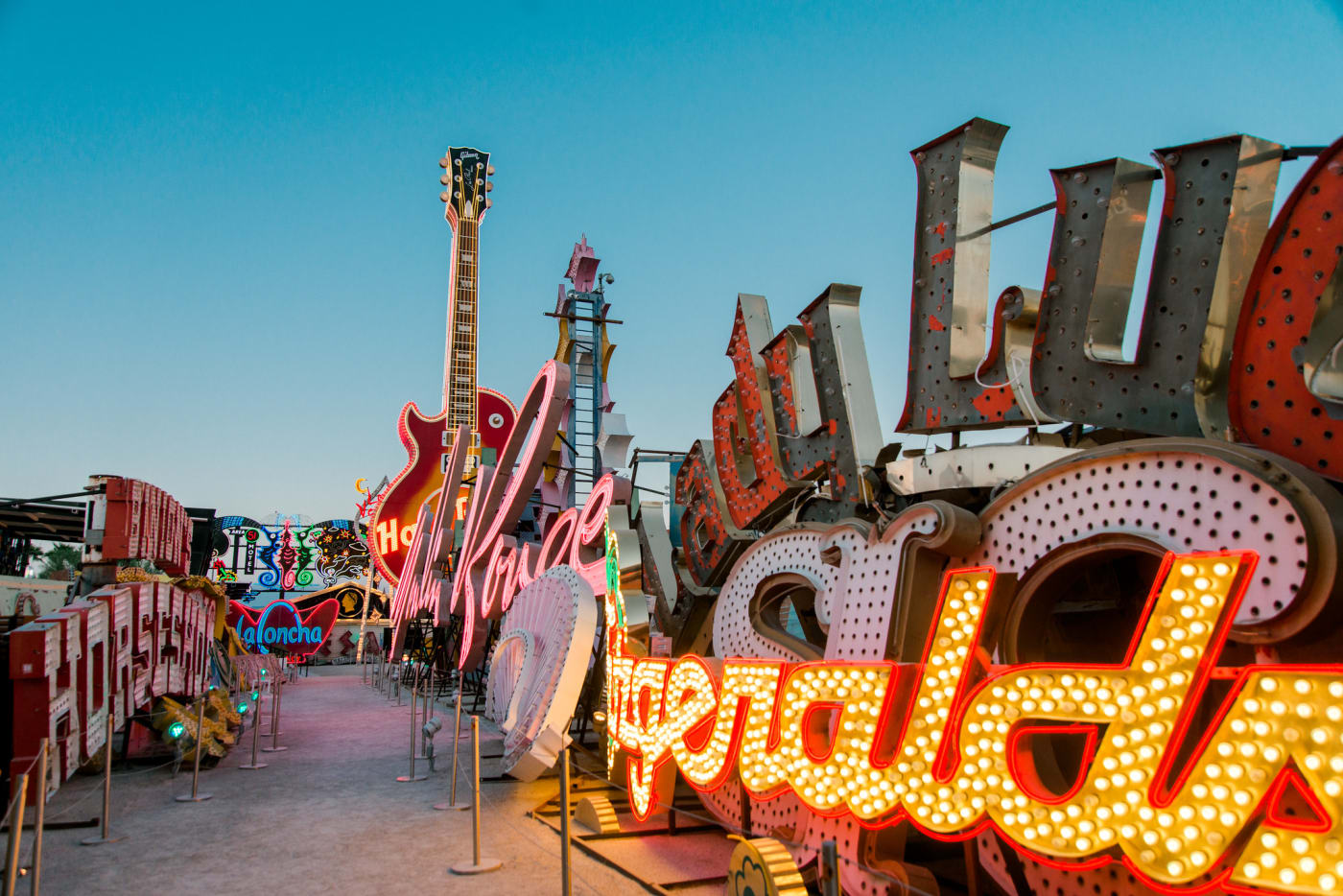
Today, part of this historic sign lives on at The Neon Museum, where it serves as a reminder of downtown’s heyday. A section of the “H” wall from Binion’s 1961 re-design is now on display inside the Neon Boneyard at The Neon Museum.
Preserved among other legendary casino signs, the Horseshoe’s glimmer continues to tell the story of Las Vegas’ transformation from dusty outpost to Entertainment Capital of the World.
References
Swanson, D. (2014). Blood Aces: The wild ride of Benny Binion, the Texas gangster who created Vegas poker. Penguin Books.
University of Nevada, Las Vegas. (n.d.). TV, the WSOP, and the legend of Benny Binion. UNLV News. https://www.unlv.edu/news/article/tv-wsop-and-legend-benny-binion
Binion’s Gambling Hall. (n.d.). History of Binion’s. https://www.binions.com/history.php

The Most Photogenic Spots at The Neon Museum (And How to Capture Them)

What Your Favorite Vintage Las Vegas Sign Says About You
