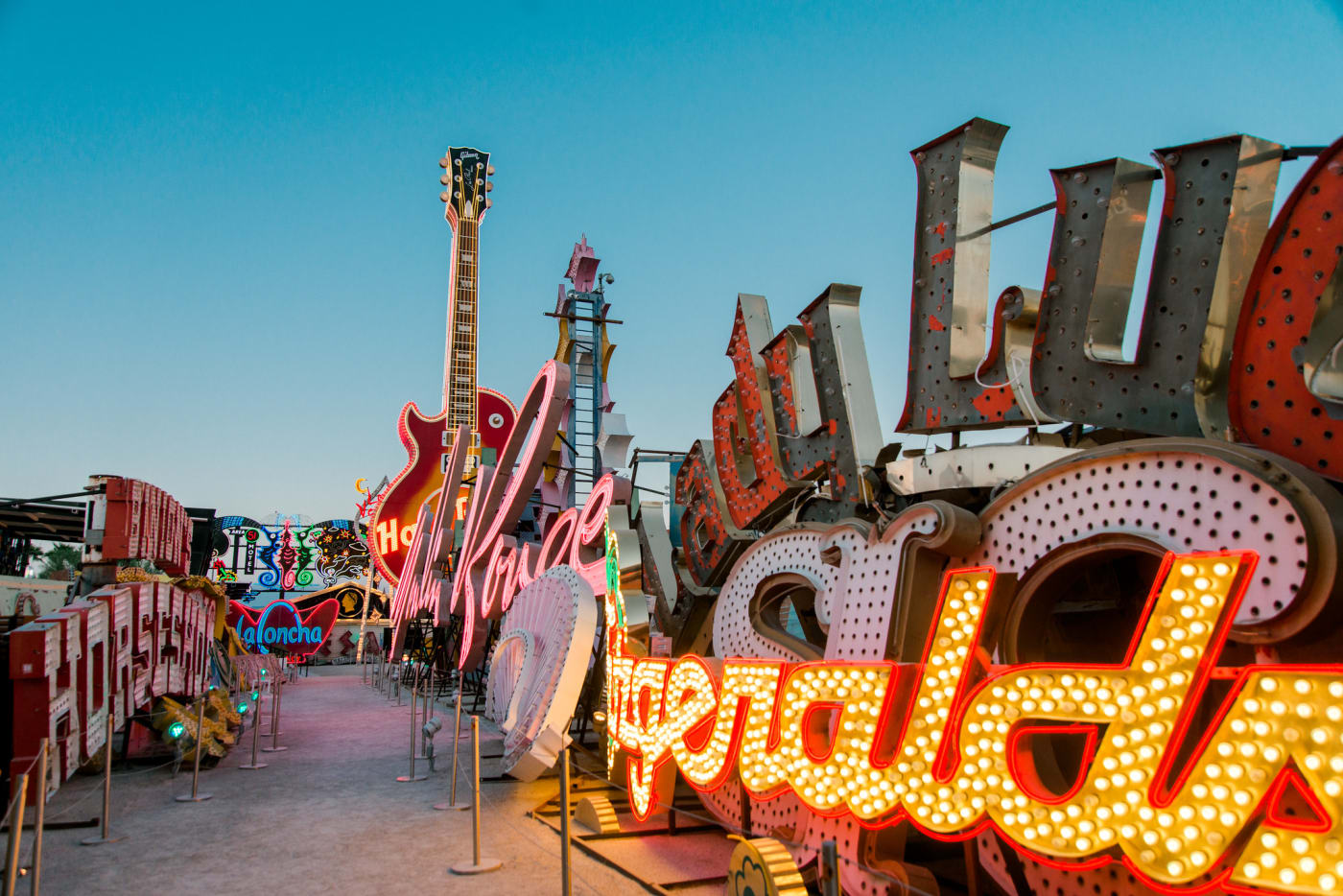
Las Vegas has always been home to some of the best, and most unique, signs in the world. We are the trailblazers when it comes to glowing marquees and towering digital displays. And if there’s one thing Vegas does well, it’s adapt.
As new developments rise across the Las Vegas Valley, we’re seeing a familiar pattern of bold architecture paired with equally ambitious signage. While materials and technologies have evolved, the goal is still to capture attention, communicate identity, and contribute to the ever-changing visual language of Las Vegas.
Several major projects are currently reshaping Las Vegas, each bringing its own approach to design, branding, and signage. Let’s look at a few.

Courtesy: Ballpark Experience Athletics
The Athletics Ballpark
The planned ballpark for the Oakland Athletics on the former Tropicana site represents one of the most significant transformations on the Strip in recent years. While we don’t have the complete details of the final signage, early renderings suggest a blend of large-scale digital displays and architectural lighting integrated directly into the structure.
This approach reflects a broader trend in modern Las Vegas design of signage that’s no longer confined to a single marquee or pylon sign. Instead, it becomes part of the building itself and includes wrapping digital displays, illuminated entrances, and a cohesive visual identity visible from multiple vantage points.
But these design ideas aren’t brand new. In many ways, these expansive signs mirror the evolution seen in mid-century Las Vegas, when resorts like the Stardust and the Dunes used neon signs to define not just their entrances, but their entire presence along the Strip.

Sphere
Perhaps no recent addition has redefined signage more dramatically than Sphere. Its fully programmable LED exterior transforms the concept of a sign into an immersive, ever-changing surface.
Sphere presents dynamic visuals that can shift from branding to art to current events in seconds. This represents a significant departure from traditional neon, yet it still aligns with Las Vegas’ long-standing emphasis on movement, animation, and visual impact.
Hard Rock Las Vegas (Former Mirage)
The transformation of The Mirage into Hard Rock Las Vegas is another high-profile redevelopment that will reshape the Strip’s visual identity. Plans for the property include a distinctive guitar-shaped hotel tower, an architectural feature that will inherently function as a form of signage.
Hard Rock properties are known for bold, brand-forward design, and its sign will definitely play a central role in expressing that identity. Expect a mix of illuminated logos, large-scale digital elements, and integrated lighting that highlights the guitar tower itself as a landmark.
This kind of design, where the building becomes the sign, echoes earlier Las Vegas strategies (like the “duck” ideology in Duck Duck Shed), where properties used instantly recognizable silhouettes and lighting schemes to stand out in a crowded visual environment.
Brightline West High-Speed Rail Terminal
The Brightline West project, which will connect Las Vegas to Southern California via high-speed rail, introduces a different kind of development: infrastructure with strong branding potential.
The Las Vegas terminal is expected to feature clean, modern design with prominent signage that prioritizes clarity and wayfinding. Unlike resort signage, which often emphasizes spectacle, transit-oriented signage must balance visibility with usability.
Even so, branding will remain central. Stations, platforms, and entry points will likely incorporate consistent visual elements that establish a recognizable identity. We’re excited to see how the company will bring their branding to the West Coast and potentially adapt it compared to their Florida lines.
Las Vegas Convention Center Expansion and Campus Growth
Ongoing development around the Las Vegas Convention Center continues to expand its footprint as a global events hub. As the campus grows, so does the need for cohesive signs across multiple buildings and entry points.
Here, the building’s signs serve a functional but equally important role as they guide thousands of attendees and reinforce the Convention Center’s identity. Large-scale digital boards, directional systems, and exterior branding all contribute to a unified visual experience across a sprawling environment. The convention center already has a really unique and modern architectural design so it will be interesting to see how designers add to this as they expand.

Fontainebleau Las Vegas
Recently completed, Fontainebleau Las Vegas takes a more restrained approach to signage compared to many of its neighbors. Rather than relying on oversized or highly animated displays, the property emphasizes architectural presence, lighting, and repetition of its name across the property.
Its branding is visible, but not dominant in the way classic Strip signage has been. Instead, the building’s scale, curvature, and lighting do most of the visual work.
This approach highlights a shift for some modern developments, where architecture itself carries more of the identity, and signage plays a supporting role rather than being the main attraction.

Photographed as part of the UNLV Special Collections and Archives
Resorts World
Another relatively recent project on the Strip, Resorts World represents a different evolution of signage with the use of interconnected digital displays across an entire property.
Instead of a single defining sign, the resort relies on a network of LED panels and screens that work together to create a layered experience. Messaging can be updated instantly, coordinated across multiple surfaces, and tailored to different audiences.
The Future of Signs in Las Vegas
Across all of these developments, we can see a few clear patterns.
First, signage is becoming more integrated and is no longer something added onto a building. Many times, the signs are embedded into the design of the properties and draw on unique lighting systems and structural elements to create the property’s visual identity.
Second, digital technology is expanding what signage can do. Displays are now programmable, responsive, and often interactive. This allows properties to evolve their messaging continuously rather than relying on a fixed identity.
Finally, differentiation remains critical. In a city defined by competition for attention, each new project must establish a distinct visual presence. Whether through scale, form, or technology, a property’s sign continues to be one of the most effective ways to set themselves apart.
Signs have always been important to Las Vegas and while materials and methods have changed, the underlying goal remains consistent: to be seen, remembered, and experienced. As these new developments take shape, their signs will define how people navigate, perceive, and connect with the properties and the city itself.

The Neon Museum to Illuminate Inaugural Formula 1 Heineken Silver Las Vegas Grand Prix 2023 Sign to Close Out Duck Duck Shed 2026, Oct. 26

