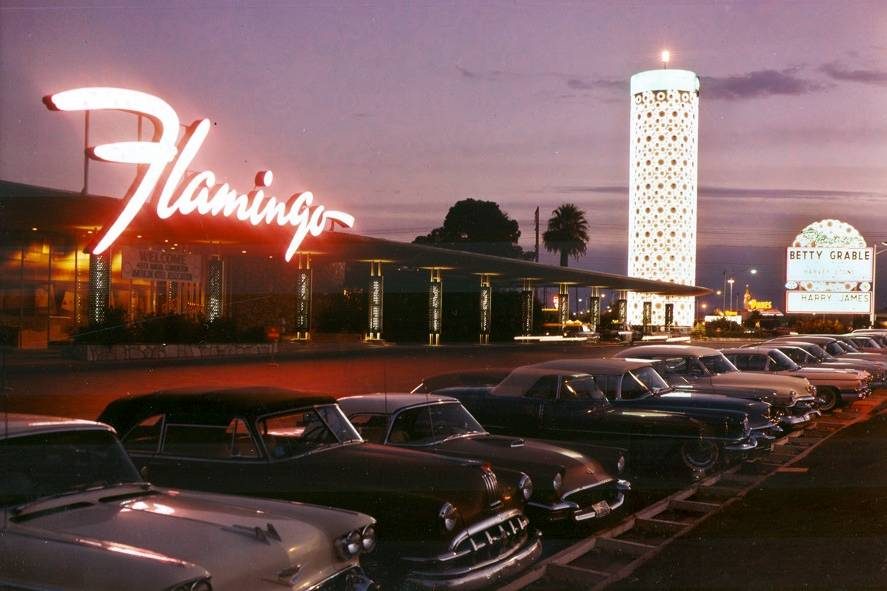
Few places embody the spirit of classic Las Vegas like The Flamingo. When it opened on December 26, 1946, it marked the beginning of a new era. Nearly 80 years later, The Flamingo remains one of the Strip’s most memorable hotels and is a symbol of the city’s evolution from desert outpost to global destination.
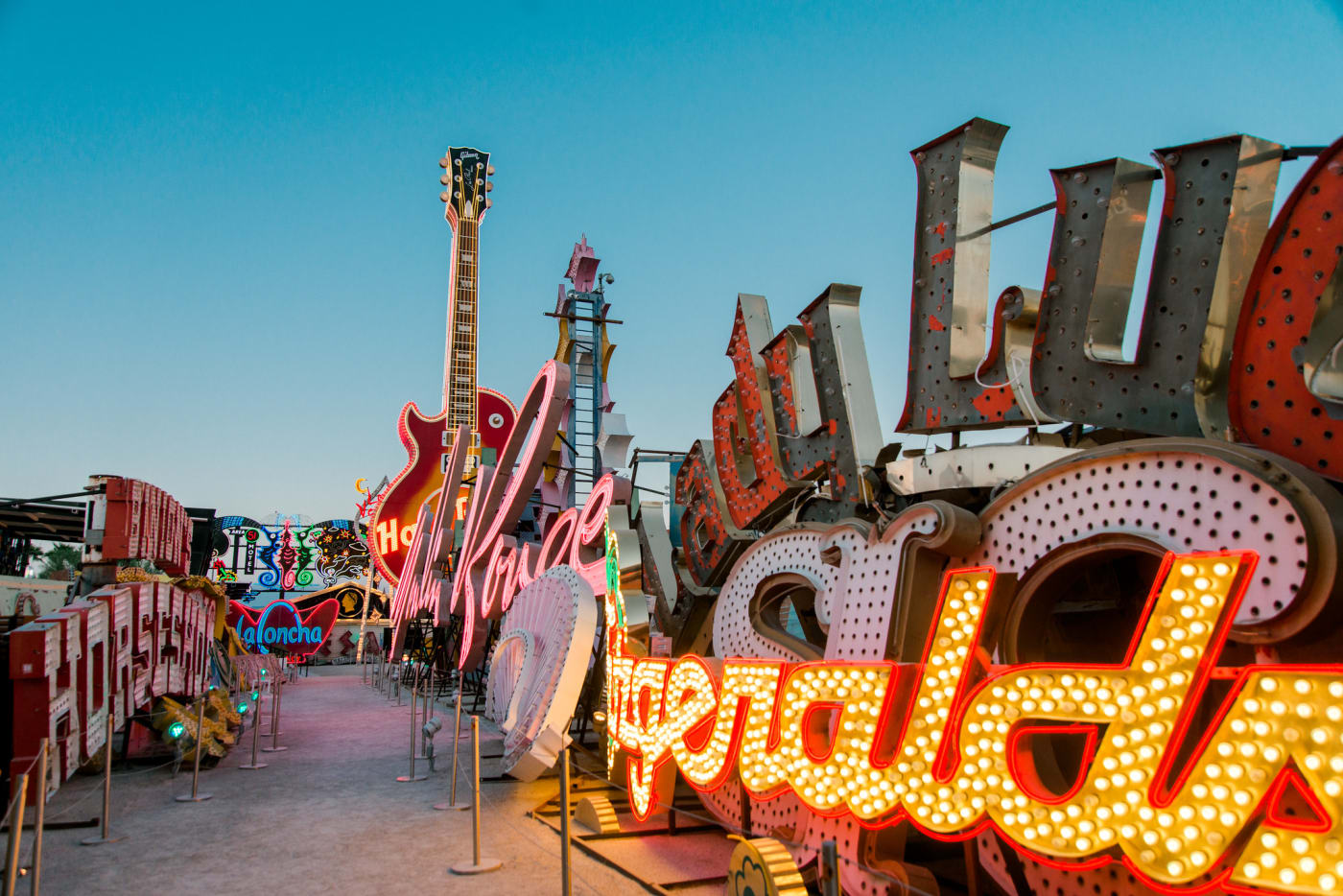
At the Neon Museum, The Flamingo’s story lives on through the vivid glow of its iconic sign.
The Birth of a Las Vegas Landmark
The Flamingo is considered the first modern resort on what we now know as the Las Vegas Strip. The infamous resort was conceived by Billy Wilkerson and ultimately completed under the direction of Benjamin “Bugsy” Siegel. It set a new standard for luxury with its sleek, modern design and vibrant décor. It was much different than the Western-themed casinos that dominated the area at the time.
Billy Wilkerson’s Vision
Long before the Flamingo’s pink plumage lit up the desert sky, the concept belonged to Hollywood entrepreneur Billy Wilkerson. He imagined a refined, modern escape inspired by the stylish clubs and restaurants he built in Hollywood.
Instead of saloons and frontier themes, Wilkerson wanted:
- Sleek architecture with clean, modern lines
- Upscale dining and cocktails served in elegant lounges
- Top-tier entertainment modeled after Hollywood nightspots
- A polished atmosphere
Bugsy Siegal’s Impact
When Benjamin “Bugsy” Siegel took control of the project, the Flamingo became a huge national story. Siegel expanded the scope dramatically, envisioning a resort that would rival Hollywood’s grandest hotels.
Construction delays, overspending, and pressure mounted in the final months before opening. While opening night at The Flamingo was full of both ups and downs, it quickly established itself as the best destination for travelers seeking entertainment, indulgence, and the promise of something new.
Mid-century Style and Star-Studded Entertainment
Throughout the 1950s and 1960s, The Flamingo helped define Las Vegas. Its showrooms hosted legendary performers, from Wayne Newton to Dean Martin, and its poolside atmosphere and neon aesthetic celebrated the city’s vibrant spirit.
The resort continued to modernize through the decades, replacing original buildings with new towers while preserving its signature identity: the bright pink accents, the tropical theme, and the unmistakable cursive script that has become one of the Strip’s most enduring logos.
Reinvention Through the Decades
Nearly 80 years after its opening, The Flamingo continues to reinvent itself while honoring its heritage. Modern renovations have introduced new dining, entertainment, and guest experiences, yet the property still embraces the charm that made it legendary.
Its wildlife habitat, one of the Strip’s rare natural escapes, remains a unique part of its identity and shows that even in a city built on change, storytelling and character are still important to the city.
The Flamingo Sign: A Neon Icon

The Flamingo’s sign evolved alongside the resort itself, and the Neon Museum is home to key pieces of that story. Among them is the restored installation in the Neon Boneyard which includes three separate pieces – the marquee plume designed by Bill Clarke and two feathers flanking the centerpiece conceived by Raul Rodriguez, both beloved example of mid-century design with sweeping lines and playful elegance. Even though the original sign no longer lives on the hotel, the installation still captures the optimism and fantasy that Las Vegas has long promised visitors.
Rescued signs like these allow guests to step back in time and experience the artistry and craftsmanship that once lit the Strip. For many, seeing the Flamingo installation up close brings back memories, such as a first trip to Vegas, a family vacation, or a classic photograph from the ’50s or ’60s.
Honoring 80 Years of Las Vegas History
As The Flamingo approaches its 80th anniversary, its story is a reflection of Las Vegas itself. Bold, colorful, resilient, and constantly reinventing, it stands as a testament to the city’s enduring appeal.
Whether you’ve stayed at the resort, admired its neon glow, or seen its sign at the Neon Museum, The Flamingo’s legacy continues to shine. And as we celebrate nearly eight decades of history, we honor the creativity, risk-taking, and imagination that made it, and Las Vegas, what it is today. Come visit The Neon Museum to see the Flamingo sign for yourself!
Sources
Duffion, D. (n.d.). Billy Wilkerson. http://www.onv-dev.duffion.com/articles/billy-wilkerson
Caesars Entertainment. (n.d.). Flamingo Wildlife Habitat. https://www.caesars.com/flamingo-las-vegas/things-to-do/wildlife-habitat
The Mob Museum. (2020, August 18). How Billy Wilkerson and Bugsy Siegel created the Flamingo Las Vegas. https://themobmuseum.org/blog/flamingo-las-vegas-wilkerson-bugsy/
The Neon Museum. The Flamingo Ball
https://neonmuseum.org/news/the-flamingo-ball/
The Neon Museum. The Flamingo Finds Its Feathers: How Raul Rodriguez Created One of Las Vegas’ Most Enduring Symbols
https://neonmuseum.org/news/the-flamingo-finds-its-feathers-how-raul-rodriguez-created-one-of-las-vegas-most-enduring-symbols/


